
I was born in 1979 in a small town in Rajasthan, India.
If I look back at my life today, there is one pattern that appears again and again.
Every time I thought I had arrived somewhere important, I eventually discovered I was only standing at the beginning of another journey.
At the time, it never felt that way.
At the time, every goal felt like the goal.
Every achievement felt like the destination.
Every challenge felt like the final mountain.
But life had a different plan.
And looking back now, I can see that my life was never really about reaching destinations.
It was about continuously expanding my understanding of how systems work.
Not just technology systems.
Human systems.
Institutional systems.
Financial systems.
Knowledge systems.
And ultimately, memory systems.
My first professional chapter began in a High Court.
Most people who know me today know me through artificial intelligence, entrepreneurship, financial engineering, or products like CrawlQ and GraQle.
But none of that is where my story starts.
After my studies, I learned typing and stenography. Those skills eventually helped me enter the judicial system, where I worked as a record keeper and typist in a High Court environment.
Every day I worked with files, records, case histories, and hearing schedules.
When a judge heard a case, one of my responsibilities was helping manage the records and assign future hearing dates based on court availability and scheduling requirements.
For many people, it might have looked like a routine administrative role.
For me, it became my first exposure to how large systems function.
Every file represented a human story.
Every case represented consequences.
Every date mattered.
Every record mattered.
At the time, I thought I had achieved something significant.
And I had.
But after some time, something familiar started happening.
A quiet curiosity.
A feeling that there was another mountain somewhere.
So I developed a routine.
I worked during the day.
And I studied during the night.
Every day.
Every week.
Every month.
Eventually that effort led to a breakthrough.
I received a Junior Research Fellowship from the Government of India.
That fellowship changed the direction of my life.
It gave me the opportunity to leave the courtroom environment and pursue larger academic and professional ambitions.
At the time my interests were in humanities, economics, public policy, and public administration.
I wanted to contribute to public service.
I wanted to understand how institutions shape society.
So I began preparing for federal services examinations.
And during that journey another opportunity appeared.
The Reserve Bank of India.
Getting into RBI was a rigorous process.
Preliminary examinations.
Main examinations.
Interviews.
Thousands of applicants.
Only a small percentage made it through.
When I finally joined RBI, I felt I had arrived.
Again.
A respected institution.
A meaningful career.
A stable future.
Surely this was the destination.
But once again it became another beginning.
I still remember one of my earliest experiences.
Only days after joining, I was responsible for handling a government transaction involving tens of millions between government entities.
My hands were trembling.
The responsibility felt enormous.
But something interesting happens when responsibility becomes part of your daily life.
The extraordinary gradually becomes ordinary.
What seems impossible on Monday becomes routine by Friday if you keep showing up.
Over the next eight years, I worked across multiple areas of the Reserve Bank of India.
Government accounting.
Currency management.
Payment and settlement systems.
Financial literacy.
Communication during periods of financial stress.
Programs designed to protect depositors and preserve trust in the financial system.
I was fortunate to work with exceptional leaders.
One of them was Chandi Mitra Sir, whom I still remember with enormous respect.
He moved me into an executive role and gave me opportunities far beyond what I expected at that stage of my career.
Together with colleagues like Raju Rahate, we worked on financial literacy programs, including animated educational initiatives designed to help ordinary citizens understand finance.
Looking back now, I can see that even then I was obsessed with the same question that drives me today:
“How do you take something complex and make it understandable? How do you transform knowledge into something people can use?”
The question that has never left him.
That question never left me.
At RBI another curiosity began growing inside me.
I became fascinated not only by central banking but by the mathematics underneath the financial system.
Interest rates.
Risk.
Probability.
Derivatives.
Credit markets.
Financial instruments.
The deeper I looked, the more fascinated I became.
And then I encountered another contradiction.
I was deeply interested in financial engineering.
But I had no engineering background.
My background was humanities and arts.
No advanced mathematics.
No physics.
No engineering.
Most people would have seen that as a limitation.
I saw it as a challenge.
So I spent an entire year preparing.
Engineering mathematics.
Probability.
Statistics.
Optimization.
Anything I could get my hands on.
The books that still sit on my shelves today tell that story better than words.
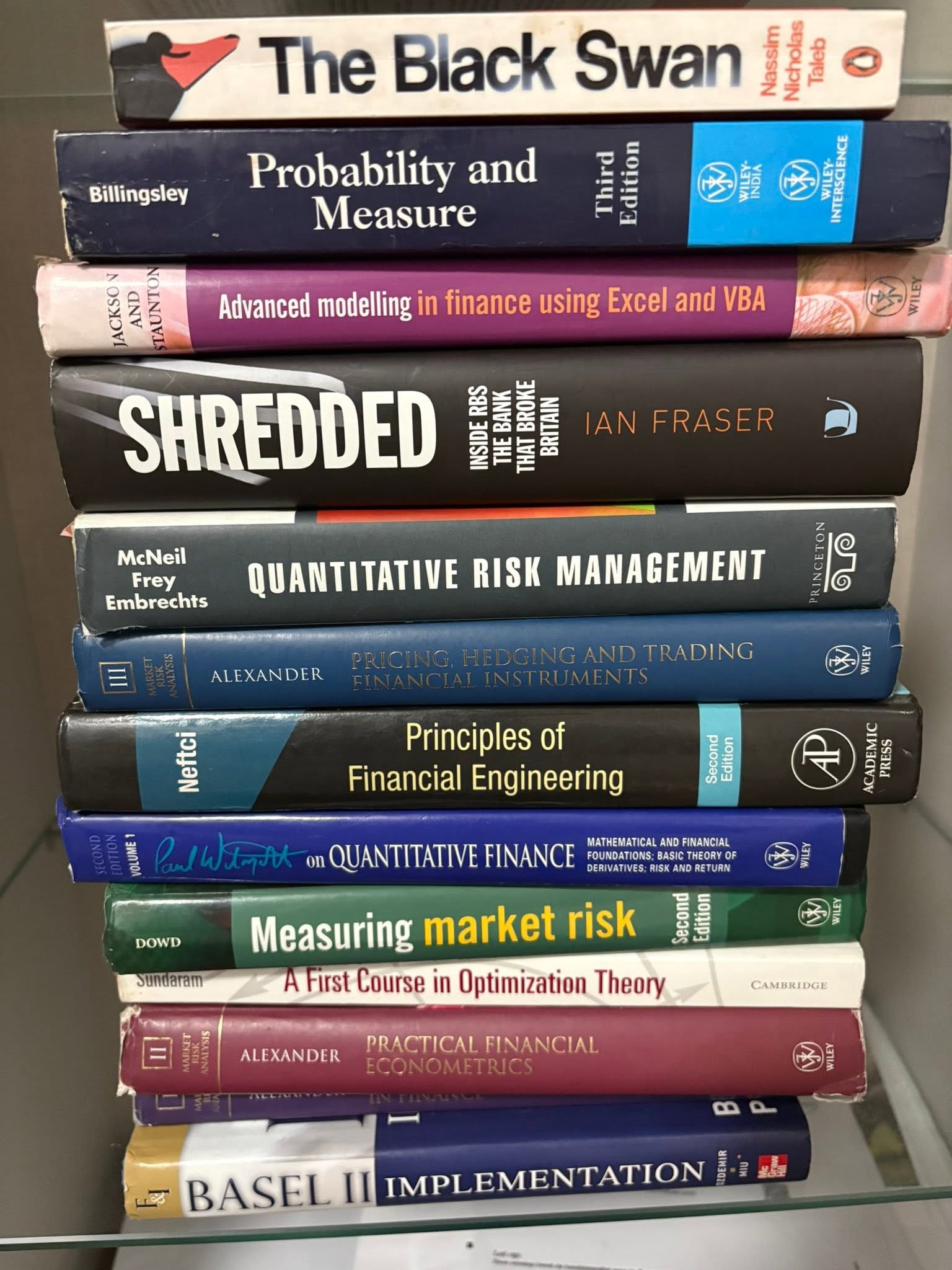
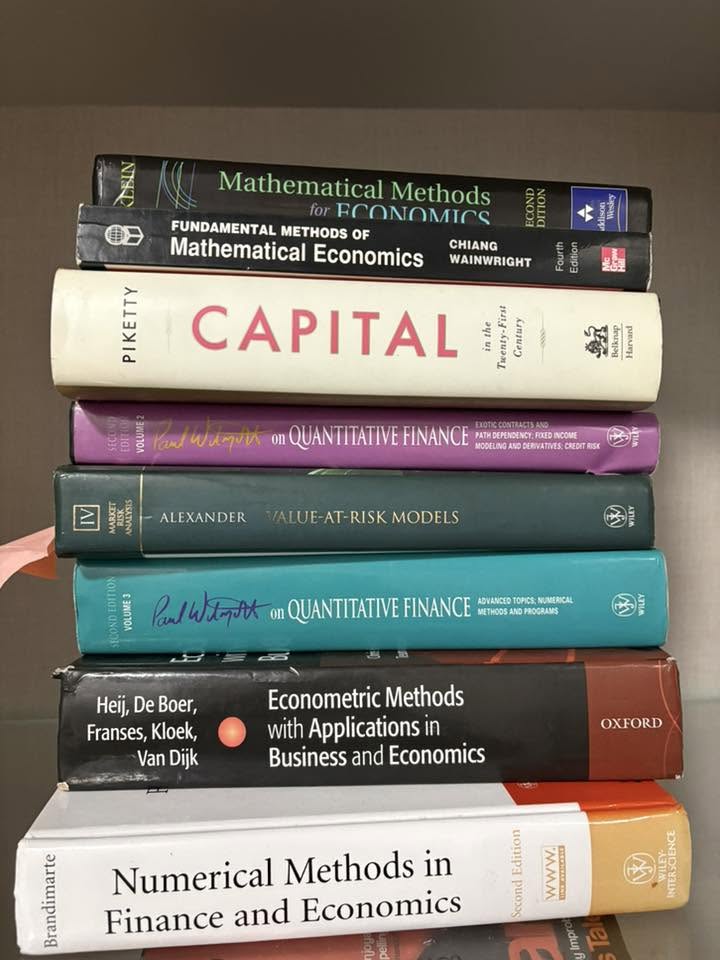
Measure Theory.
Quantitative Finance.
Financial Engineering.
Econometrics.
Optimization Theory.
Risk Management.
Numerical Methods.
Thousands of pages.
Thousands of hours.
A complete reinvention.
Then in 2010 I did something many people considered irrational.
I took a sabbatical from RBI.
I left a stable career.
I left India.
I left behind my eight-month-old daughter.
And I moved to Amsterdam.
That remains one of the hardest decisions of my life.
I arrived at the Duisenberg School of Finance in Amsterdam to pursue a research-oriented master's program in Finance and Financial Engineering.
The reality hit immediately.
Many of my classmates were eighteen, twenty-two, twenty-three years old.
Some came from elite engineering schools.
Some came from Russian mathematical schools.
Some came from China.
Others came from across Europe, America, and Latin America.
Many had spent years immersed in advanced mathematics.
I came from humanities.
The first two semesters were brutal.
I hardly looked outside my window.
My life became lectures, assignments, proofs, probability theory, measure theory, stochastic processes, derivatives, risk models, and financial mathematics.
There were moments when I questioned whether I belonged there.
One subject in particular nearly broke me.
Measure Theory and Probability.
Dense mathematics.
Abstract mathematics.
The kind of mathematics that humbles almost everyone.
I struggled.
I failed.
I went back.
Studied harder.
Changed my approach.
And eventually came the examination.
The professor would hand you a theorem.
You would stand at a whiteboard.
And you would prove it.
Line by line.
Argument by argument.
There was nowhere to hide.
Either you understood it or you didn't.
I scored a nine.
“For the first time, I truly understood that the biggest limitations in life are often self-imposed.”
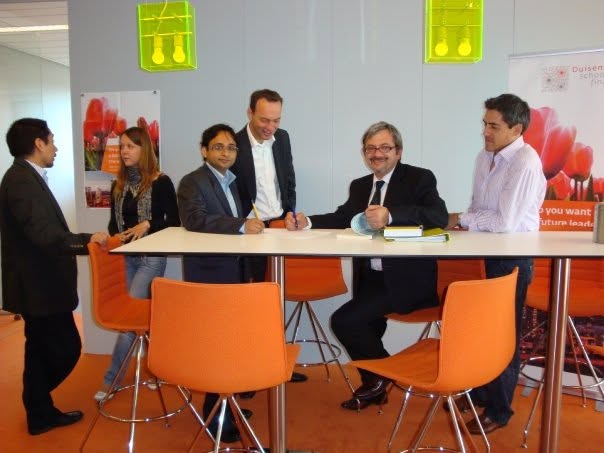
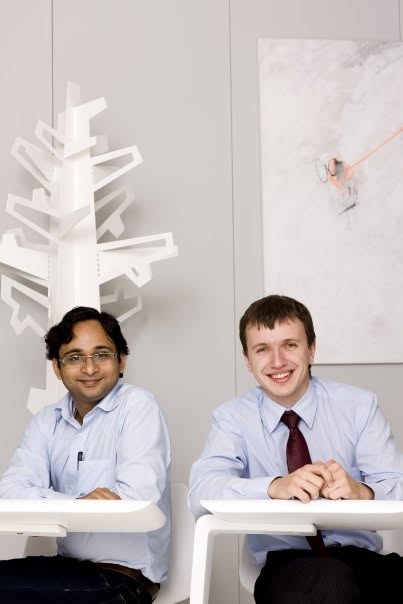
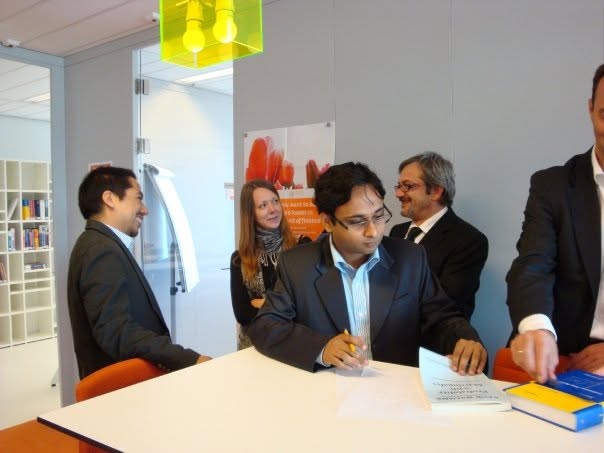
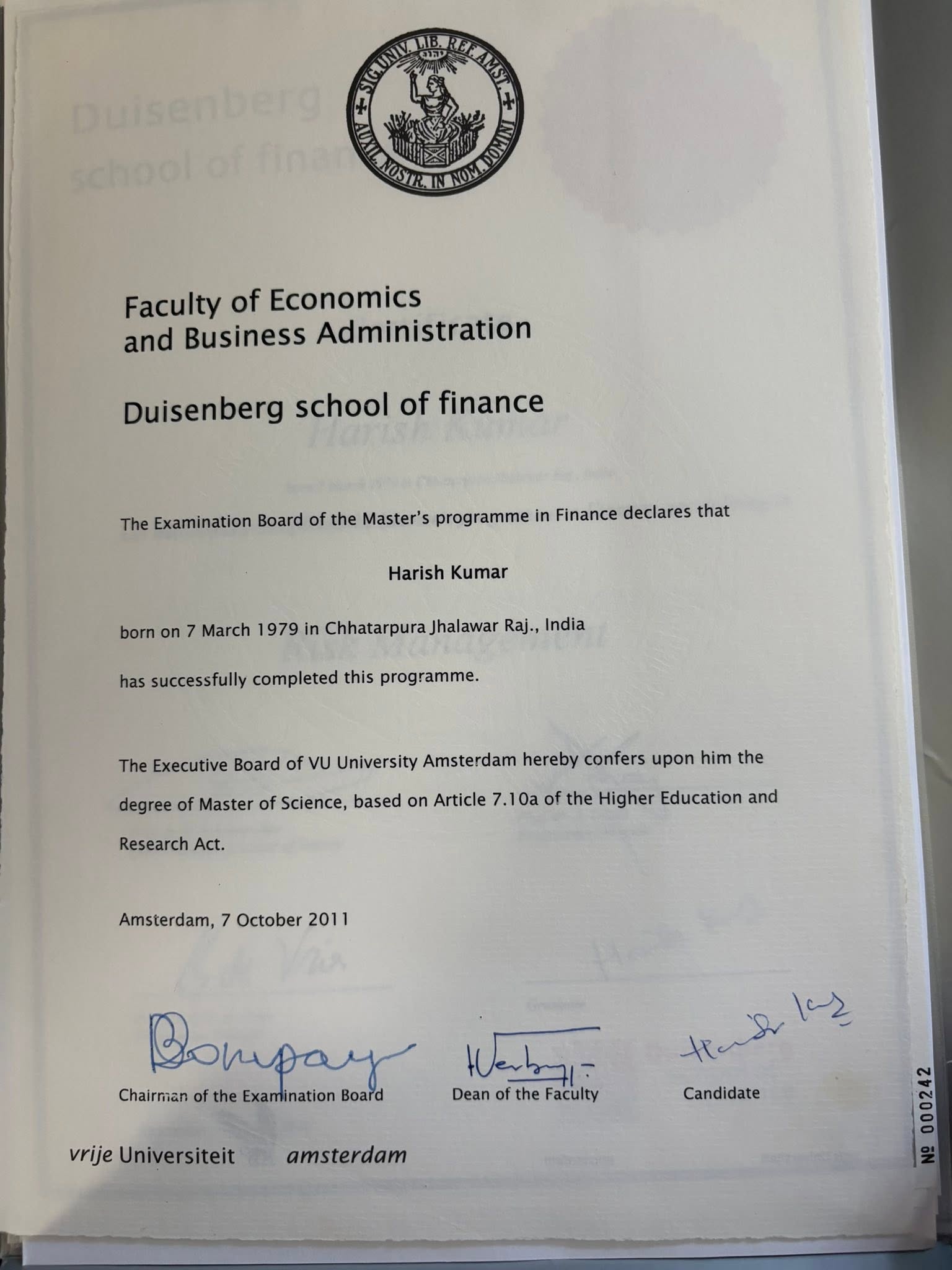
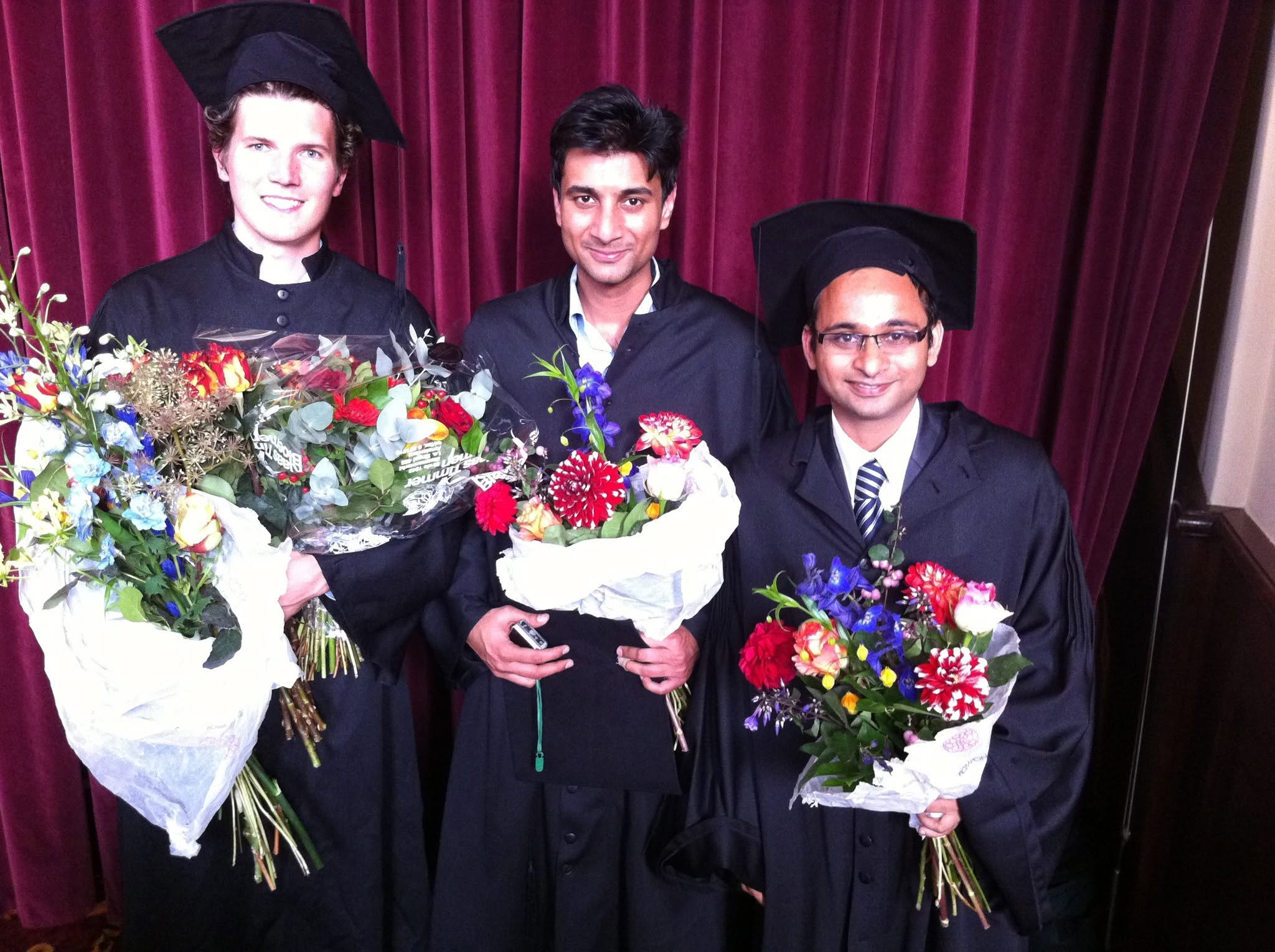
After graduating with my Master of Science degree in Finance from the Duisenberg School of Finance in Amsterdam, I joined ING's Model Validation department.
Again, I entered a room where I felt like the least qualified person.
Most of my colleagues were PhDs.
Physics.
Mathematics.
Engineering.
Economics.
Financial engineering.
Cagkan Erbas was one of the smartest people I have ever met.
My manager was one of the sharpest minds I have ever worked with, a PhD in Financial Engineering himself.
Instead of protecting me from difficult challenges, he gave me more of them.
And I am grateful for that.
Those years taught me rigor.
How to think.
How to challenge assumptions.
How to validate models.
How to defend ideas.
After ING I moved into consulting with EY. Diederik Fokkema was my mentor and he is one who pushed me to Canary Wharf - London to work with best of best financial institutions.
A completely different world.
I worked on major financial transformation programs.
Trading risk initiatives at Deutsche Bank in London.
Credit risk programs for large institutions.
Projects that took me across countries and industries.
London.
Sweden.
The Netherlands.
Every project taught me something new.
But eventually I found myself searching for stability.
That search led me to Rabobank.
And then, once again, the same question appeared.
What comes next?
By that time I had seen central banking, quantitative finance, consulting, transformation, risk management, and corporate life.
The answer surprised me.
Entrepreneurship.
In 2019 I formally registered my company in the Netherlands.
I had no startup background.
No SaaS experience.
No marketing background.
No sales background.
No product launch experience.
Nothing.
Only curiosity.
The same curiosity that had taken me from humanities to financial mathematics.
That became the beginning of CrawlQ.
I found one of my cousins in India who had just finished school and was preparing for engineering.
I thought perhaps we could learn together.
Build together.
Grow together.
So we started building.
At the time I already knew Python, machine learning, data science, and analytics.
But building a product was different.
Front-end development.
Back-end systems.
Infrastructure.
Customer experience.
Scaling.
Support.
Everything was new.
We learned as we went.
Then someone introduced me to AppSumo.
I had never purchased a lifetime deal in my life.
I barely understood the concept.
Yet somehow I decided to launch there.
Just days before launch, everything changed.
I discovered that the person my own cousin I trusted most on the project had been working elsewhere.
The trust broke.
The timing could not have been worse.
The launch was approaching.
The codebase was fragile.
The future was uncertain.
And because it involved family, it hurt even more.
I had a choice.
Quit.
Or learn.
“I chose learning. Again.”
I opened the codebase.
Line by line.
Function by function.
Module by module.
I reviewed everything.
Studied everything.
Rebuilt everything I could not trust.
At the time I had sold one of my properties, which gave me enough resources to hire developers and designers and continue moving forward.
Somehow we launched.
Then we launched again.
Then we pivoted.
Then we rebuilt.
Then we pivoted again. I worked with excellent developers like Hitesh and Avinash.
That cycle became entrepreneurship.
Every mistake became a lesson.
Every customer became a teacher.
To support the company financially, I moved into freelance consulting assignments.
Philips.
Amazon Ring. SNS Bank and went back to ING for a brief period.
The extra bit of income funded product development.
The experience expanded my understanding.
Everything I learned flowed back into the products.
Then came perhaps the most important realization of my founder journey.
My understanding of AI based coding and development. Since the start of this year - I took things in my hand. Zero developer - full hand - one man me and my coding terminal.
The challenge was not coding.
The challenge was architecture.
The challenge was memory.
The challenge was knowledge itself.
The challenge was migrating 10k registered users and overhaul of legacy modules.
That realization eventually became GraQle.
GraQle started as an attempt to solve a problem I was personally experiencing.
I experimented with coding constitutions.
Cloud.md files.
Rules.
Standards.
Best practices.
But something was missing.
Documents were not enough.
Prompts were not enough.
I wanted architecture to reason before code was written.
So I began building a knowledge graph as my own reasoning agent.
Every architectural decision became a node.
Every node became a specialized decision-making entity.
When a request enters the system, those decisions activate, interact, validate constraints, and collectively determine the best path forward.
Only then does code get written.
Like ripples spreading across a lake after a pebble touches the water.
“Architecture, not your files. Memory, not documents. Reasoning before implementation.”
Today GraQle is the engineering tool behind everything else I build.
With GraQle as my development tool, I built Studio CrawlQ — a separate product with its own codebase.
A completely different way of thinking about brand intelligence.
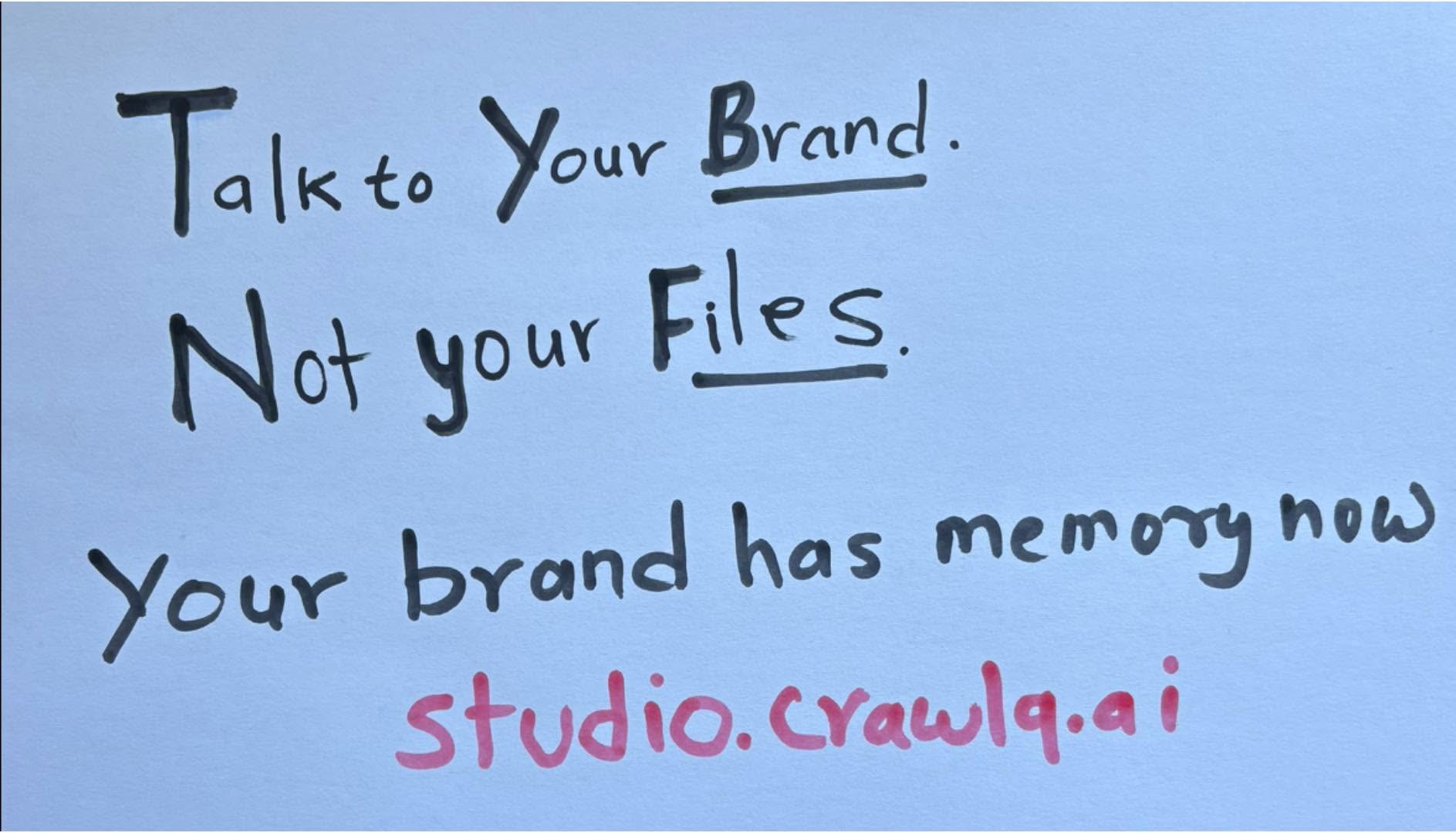
Talk to your brand.
Not your files.
Your brand has memory.
That simple sentence captures decades of my journey.
Because in many ways, my life has been a continuous exploration of memory.
I think in systems and not as coder or founder.
Court records.
Government systems.
Financial models.
Institutional knowledge.
Organizational learning.
Knowledge graphs.
AI memory systems.
Different domains.
Same curiosity.
Along the way I also invested heavily in understanding people.
I became a certified mindset coach.
I completed intensive NLP training.
I studied Generative Change under Robert Dilts.
Because after everything I had experienced, I reached a simple conclusion.
Technology changes systems.
Mindset changes people.
And every transformation begins with people.
This March I turned 47 years old.
I have two grown children.
A mortgage.
A business.
Products.
Customers.
Communities.
Responsibilities.
And something that still surprises me.
I am more hungry to learn today than I was fifteen years ago.
More curious.
More willing to start from zero.
Because every meaningful chapter of my life started exactly the same way.
With uncertainty.
With discomfort.
With the feeling that I did not belong.
And then with a decision.
To learn anyway.
To try anyway.
To build anyway.
That is my story so far.
Not a story of certainty.
Not a story of genius.
Not a story of always having the right answers.
A story of curiosity.
A story of reinvention.
A story of repeatedly becoming a beginner.
And if there is one thing life has taught me, it is this:
“Every destination I ever reached eventually became the beginning of another journey.”
And I believe the most interesting chapter is still to come.
Even a single word inspires you from my story I'll feel that deep peace in my belly.
I'm grateful to my family and friends for every support and every kind word spoken to me throughout this.
This is what 721 pull requests in 104 days built.
Talk to your brand. Not your files.
Studio CrawlQ reads your brand foundation, scores every asset against it, and tells you before anyone sees it whether it sounds like you.